A prospective patient two blocks from your office pulls out their phone, types "dentist near me," and taps "Call" on one of the first three practices Google shows them. They never scroll. They never see your website. If your practice sits on page two, that patient became someone else's new-patient exam before your front desk ever had a chance.
That block of three listings with the little map is the Google Maps Local Pack (also called the Map Pack or 3-Pack), and it is now the single most valuable piece of real estate in dental marketing. Practices that land in it capture dramatically more phone calls, direction requests, and website clicks than practices ranked just below. Nearly half of all Google searches carry local intent, most "near me" searchers visit a business within a day, and the overwhelming majority of Map Pack winners sit within about five miles of the person searching.
The good news: local SEO is one of the few marketing channels where a solo practice can consistently outrank a corporate group, because the rules reward completeness and consistency more than budget. Here is how to win the map.
Before You Start
Three things need to be in place before any of the steps below will move the needle:
- A claimed and verified Google Business Profile. This is the free listing that powers your Map Pack presence. If you have never claimed it, that is step one below. If a previous marketing vendor claimed it, get your login back.
- Consistent NAP. Your Name, Address, and Phone number must be identical everywhere they appear online, down to the suite number and the way you abbreviate "Street." Inconsistent NAP is the quiet reason many well-run practices never rank.
- A functioning website. It does not need to be elaborate, but it needs your real address, fast load times on mobile, and at least a page describing your core services. Google cross-checks your site against your profile to decide how much to trust you.
If those three are solid, you are ready to compete.
Step-by-Step Guide
1. Claim and verify your Google Business Profile. Search your practice name on Google, look for "Own this business?", and complete verification (usually by video or postcard). You cannot rank in the Map Pack on a profile you do not control.
2. Complete every single field. Google's local algorithm rewards relevance, and relevance comes from information. Fill in hours (including holiday hours), phone, website, appointment link, description, opening date, and every attribute that applies (wheelchair accessible, accepts new patients, offers online care). Empty fields are missed ranking signals.
3. Choose the most specific primary category, then add secondary ones. "Dentist" is fine as a catch-all, but if you have a focus, a more specific primary category such as "Cosmetic dentist," "Pediatric dentist," or "Orthodontist" helps you surface for those higher-intent searches. Then add secondary categories for the other services you provide.
4. List every service individually. Do not bundle everything under "general dentistry." Add discrete service entries -- dental implants, Invisalign, emergency dentistry, root canals, teeth whitening, crowns -- each with a short description that uses the words patients actually type. This is how Google learns the full range of what you do.
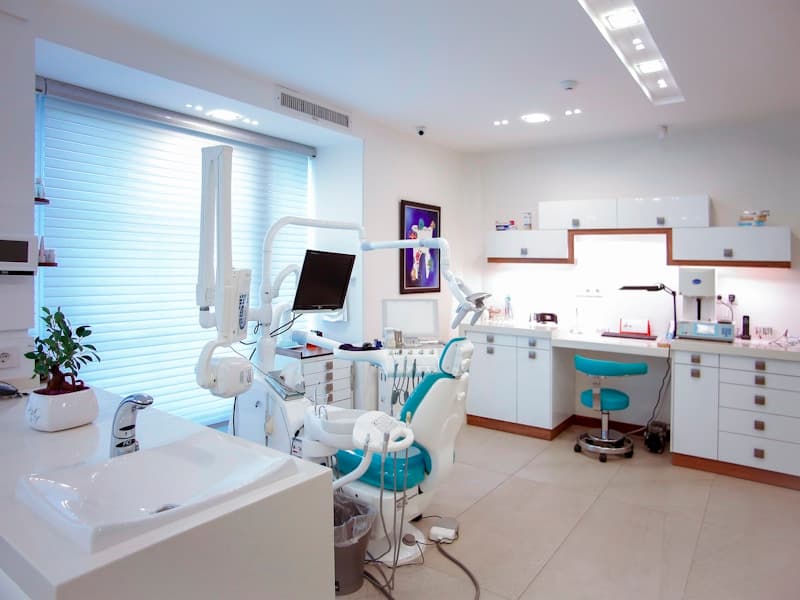
5. Add real photos, and keep adding them. Upload genuine photos of your exterior (so people recognize it from the street), your reception area, your operatories, and your team. Fresh, authentic images signal an active, real business and give patients the confidence to choose you. Refresh them periodically rather than uploading once and forgetting.
6. Build a review engine. Reviews are one of the heaviest controllable ranking factors, and it is not just the total count -- recency and steady velocity matter more than a big pile of stale reviews from three years ago. Ask every happy patient, make it effortless with a short link or a text, and respond to every review, positive or negative. Our guide on getting more Google reviews walks through a system your front desk can actually sustain.
7. Fix and build local citations. A citation is any online mention of your NAP -- directories, dental associations, insurance finders, health-listing sites. Make sure the big ones match your profile exactly, then expand into reputable dental and local directories. Consistency is the goal, not volume for its own sake.
8. Create localized website content. Build a real page for each core service, and if you serve distinct neighborhoods or have multiple offices, give each location its own page with its own address, embedded map, and locally written copy. Multi-location groups need a separate profile and a separate landing page per office -- Google treats each location independently and will not rank one page across several cities.
9. Track your rankings from the patient's point of view. Your rank changes with the searcher's physical location, so checking from your desk is misleading. Use a local rank tracker or search from different points in your service area to see where you actually appear, and watch which services and neighborhoods you are winning or losing.