Last updated: June 2026
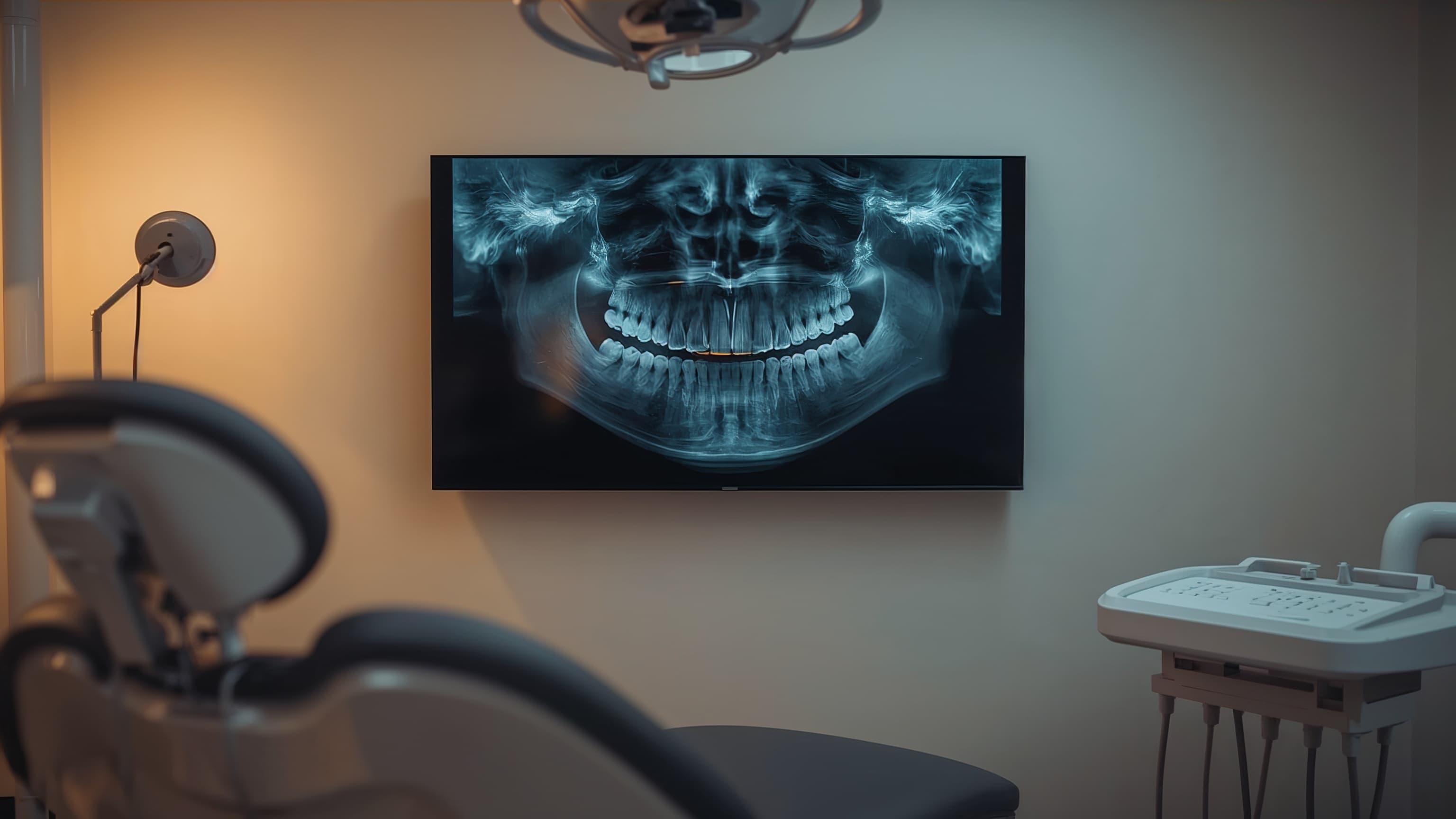
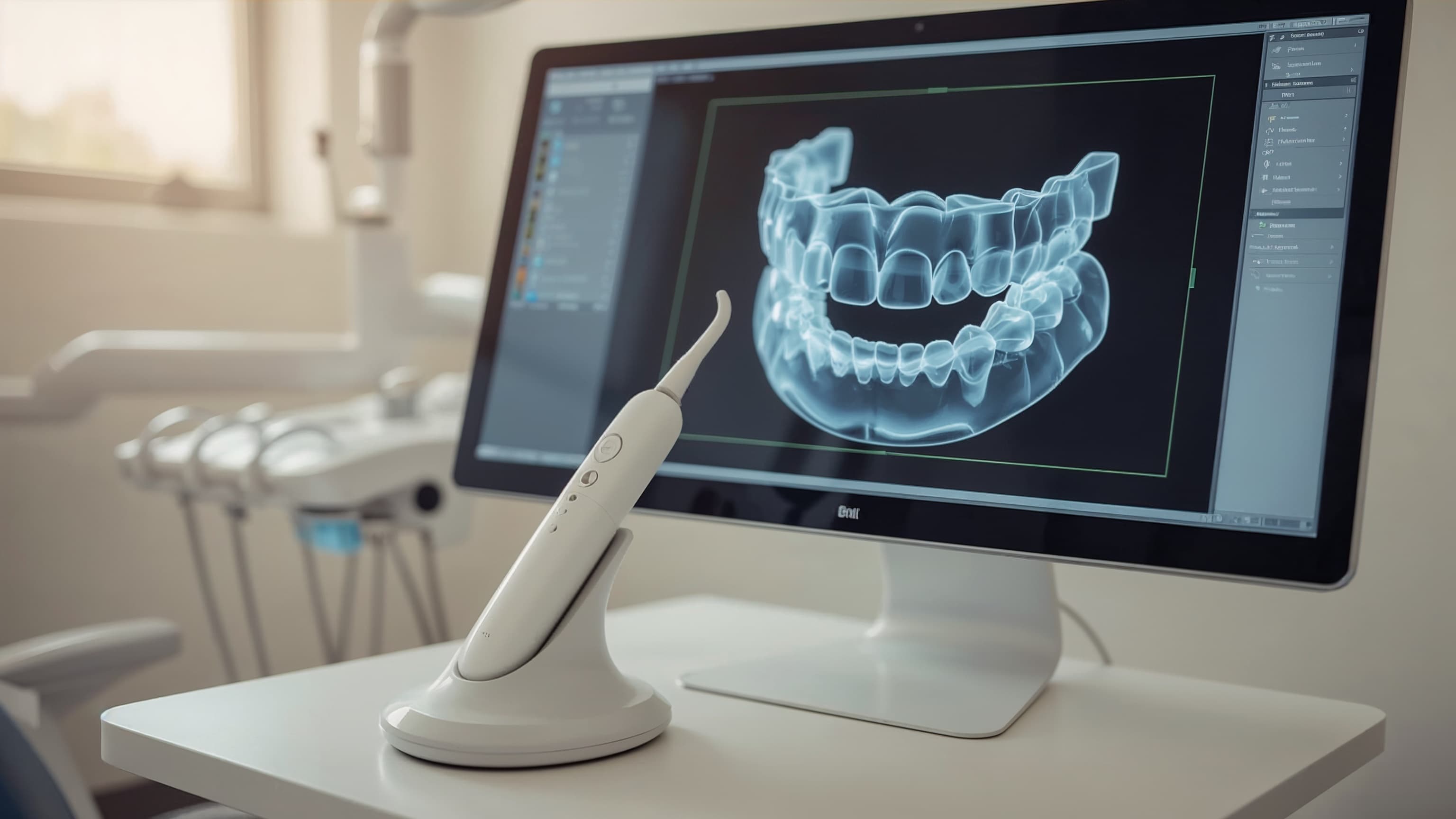
Pearl AI is a dental technology company that builds artificial intelligence software for dental practices, and its flagship product, Second Opinion, is an FDA-cleared AI that detects suspected conditions on dental radiographs in real time. When a dentist or hygienist pulls up an X-ray, Second Opinion overlays color-coded annotations on anything it flags -- suspected caries, calculus, bone loss, periapical radiolucencies, defective restoration margins, and more -- within seconds, right in the operatory.
If you've heard the name at a study club or noticed it inside your imaging software, here's the plain-English version. For the full hands-on evaluation with ratings and trade-offs, head to our Pearl review.
Company Background
Pearl was founded in 2019 in Los Angeles by Ophir Tanz, a serial entrepreneur who previously built the computer-vision advertising company GumGum. The premise: the same image-recognition technology that identified objects in photos could be trained to spot pathology on dental radiographs -- consistently, on every image, without late-afternoon fatigue.
The milestone that put Pearl on the map came in March 2022, when the FDA granted 510(k) clearance to Second Opinion, making it the first AI system cleared in the United States to detect a broad range of dental conditions on X-rays. Pearl has kept stacking clearances since: automated bone level measurement and a pediatric indication in May 2025, Second Opinion 3D for CBCT imaging later that same month (making Pearl the first dental AI company FDA-cleared for both 2D and 3D analysis), and panoramic radiograph detection in December 2025.
The venture-backed company, whose Series B was led by Left Lane Capital, now says its AI is used in more than 23,000 practices, holds regulatory clearance in 120 countries, and integrates with over 30 imaging and practice management platforms. Enterprise adoption is accelerating too: PDS Health named Pearl its enterprise AI partner in February 2026, and Coast Dental deployed the platform across all 88 of its locations.
What Pearl Does
Pearl has grown from a single product into a platform. Here's the current lineup:
- Second Opinion -- the flagship. Real-time, FDA-cleared detection of suspected pathology on bitewing, periapical, and panoramic radiographs, displayed as color-coded overlays chairside.
- Second Opinion 3D -- extends the AI to CBCT scans, automatically identifying anatomical structures like the inferior alveolar canal, maxillary sinus, nasal space, and airway to speed up 3D treatment planning.
- Practice Intelligence -- an analytics layer that audits past radiographs and treatment plans to surface undiagnosed or unscheduled treatment, then turns those findings into prioritized call lists and morning-huddle agendas.
- Pearl Voice -- launched in April 2026, an ambient AI scribe that listens to chairside conversations and generates SOAP notes and perio charts automatically. We covered the Pearl Voice launch in detail.
- Newer additions -- Imagecheck, a real-time X-ray quality assurance tool launched in September 2025, and an AI-powered revenue cycle management platform announced in May 2026.
Key Features: What Second Opinion Actually Does
Since Second Opinion is what most people mean when they say "Pearl AI," here's how it works day to day.
It detects up to 18 findings per image. That includes suspected caries at multiple stages, calculus, periapical radiolucencies, margin discrepancies, and bone loss, plus existing work like crowns, bridges, implants, fillings, and root canals. Analysis typically takes under 30 seconds per image, and clinical validation studies put detection accuracy in the 94-95% range.
It's a second reader, not a diagnostician. The FDA clearance positions Second Opinion as an aid -- the dentist always makes the call. Practitioners describe the workflow like a check-engine light: anything the AI highlights gets a closer look. The system is deliberately tuned toward sensitivity, so expect it to flag borderline areas you may choose to watch rather than treat.
Chairside co-diagnosis is the real selling point. When patients see a color-coded overlay on their own X-ray, the conversation changes. Instead of taking the dentist's word for it, patients see the decay highlighted on screen -- and the perception of "selling dentistry" fades. Practices consistently report better case acceptance, though real-world gains run more moderate than vendor marketing suggests and depend on how the team presents findings.
Pearl led the move to 3D. It was the first dental AI company FDA-cleared for both 2D radiographs and 3D CBCT analysis; Overjet has since added its own CBCT clearance, but Pearl's cleared coverage still spans the most imaging types. If your practice lives in cone-beam imaging, it's worth reading our Pearl vs Diagnocat comparison -- Diagnocat goes deeper on structured CBCT reporting, while Pearl offers the broader cleared footprint.
It plugs into your existing stack. Second Opinion integrates with more than 30 imaging and practice management platforms -- Dexis, Carestream, Dentrix, Eaglesoft, Open Dental, Curve, Oryx, and others -- so the overlays appear inside workflows your team already uses.
Who Is Pearl Best For?
Pearl fits any practice that takes radiographs, but it delivers the most value in a few situations:
- Multi-doctor practices and DSOs that want standardized diagnostics across providers. AI applies the same detection thresholds to every image, which is why groups like PDS Health and Coast Dental adopted it at enterprise scale.
- Practices focused on case acceptance. If your team already uses intraoral cameras and chairside monitors for patient education, Second Opinion slots naturally into that communication style.
- Solo dentists who want a second set of eyes. Without an associate down the hall to consult, an always-on second reader has obvious appeal.
It's a tougher fit for practices with very low radiograph volume, or for clinicians who would find a sensitivity-first detection tool more distracting than helpful. Still getting oriented on the category? Our dental AI diagnostics explainer covers how these tools work.
Pricing at a Glance
Pearl doesn't publish pricing -- everything is custom-quoted through a sales conversation. A few things are clear from third-party data, though. Second Opinion is the entry point, billed as a monthly subscription per location; Practice Intelligence is the larger investment, layered on top. Expect a one-time setup fee that covers back-cataloging your historical radiographs, volume-based discounts for multi-location groups, and a 30-day free trial. Third-party reviews also note that Pearl doesn't require multi-year contracts, which lowers pilot risk.
Within the dental AI category, Pearl sits at the mid-to-upper range -- a premium investment whose value depends on your image volume and case acceptance baseline. For the full cost breakdown, including what each plan includes and the ROI math, see our Pearl pricing breakdown.
The Bottom Line
Pearl AI is one of the most broadly FDA-cleared diagnostic AIs in dentistry: a real-time second reader that flags suspected pathology on 2D and 3D images, wrapped in a growing platform that now spans analytics, voice documentation, and image quality assurance. It won't diagnose for you -- and it shouldn't -- but as a consistency layer and a patient communication tool, it's the category benchmark the rest of dental AI gets measured against. If you're deciding whether it belongs in your practice, start with our full Pearl review for the complete evaluation.