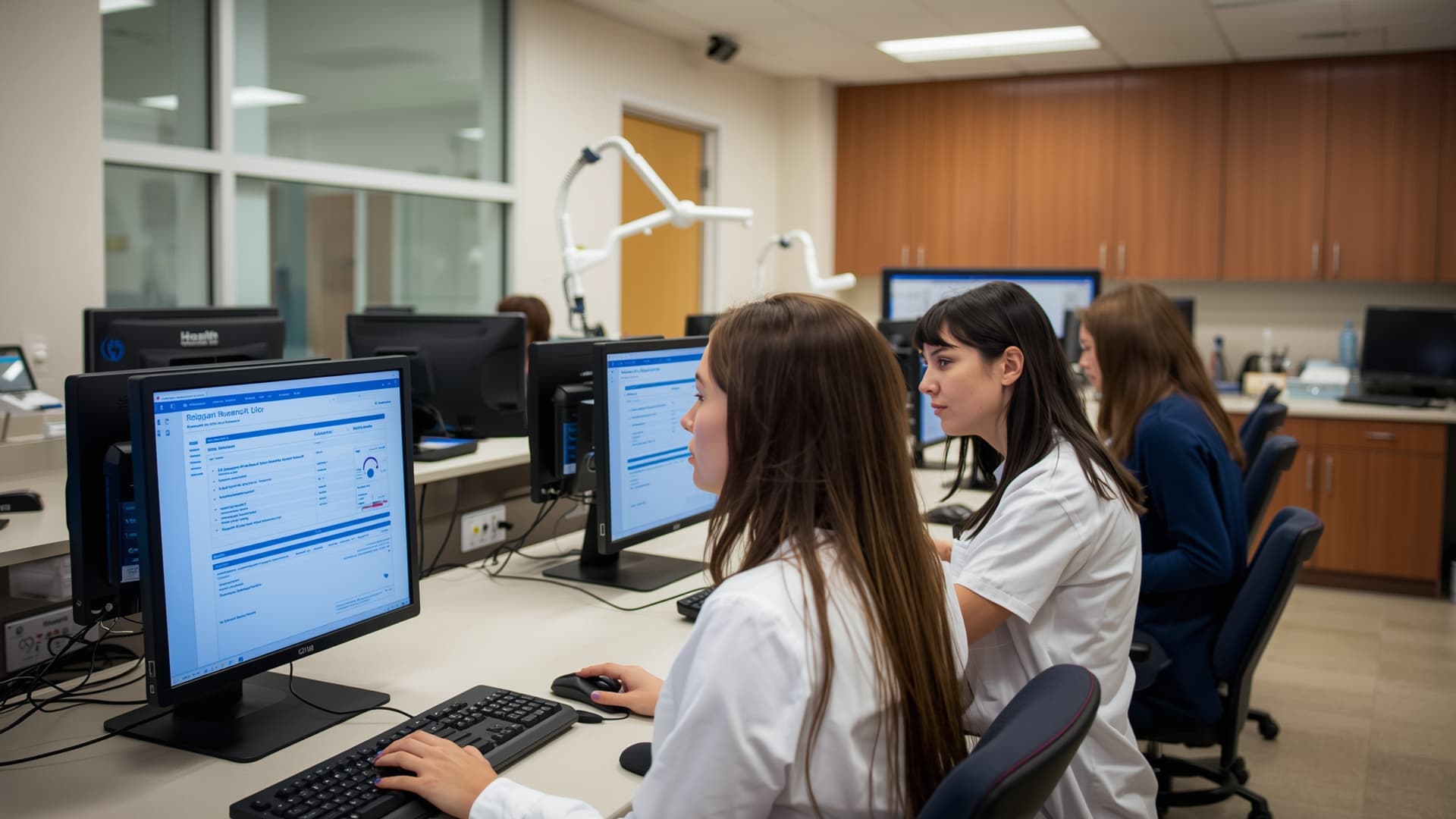
When University of the Pacific announced its partnership with PDS Health Technologies on March 23, 2026, it marked a quiet but significant shift: the Arthur A. Dugoni School of Dentistry will become the first dental school in the nation to run a dental-optimized Epic EHR across dental, medical, and ambulatory surgical care settings on a single patient record.
For private practices, that might sound like academic news. It is not. Where dental schools train is where the next generation of associates learn what "normal" looks like — and normal is about to include fully integrated medical-dental records.
What Happened
PDS Health Technologies, the technology arm of PDS Health (formerly Pacific Dental Services), will deploy its dental-optimized instance of Epic across the Dugoni School of Dentistry and the Pacific Health Care Collaborative, spanning campuses in San Francisco and Sacramento.
Key details from the announcement:
- Scope: Dental, medical, and a future ambulatory surgical center — all on one patient record
- Scale: PDS Health Technologies' platform already supports over 14 million unique patients across more than 1,250 sites of care
- Services included: Epic EHR implementation plus revenue cycle managed services
- Academic context: Students will train on interdisciplinary workflows from day one, with real-time interoperability across care settings
This builds on PDS Health's broader track record. The organization became the first DSO to deploy Epic across all of its nearly 900 supported practices in 2022, converting 9.7 million patient records in just over two years. It later partnered with High Point University's Workman School of Dental Medicine through Epic's Community Connect program.
The University of the Pacific deployment goes further. While earlier academic partnerships focused on dental-only Epic instances, this is the first to unify dental, medical, and surgical records in an academic environment.
Why It Matters for Your Practice
The practical implications extend well beyond academia.
New graduates will expect integrated records. Students training on a unified Epic platform will enter the workforce expecting their practice management software to connect with medical systems. Practices still running siloed, on-premise dental software may find it harder to recruit younger associates who trained on interoperable systems.
Medical-dental integration is accelerating. The FDI World Dental Federation released a consensus statement on integrated EHRs in 2025, identifying eight core oral health indicators that should be shared between medical and dental records. In January 2026, the ADA urged Congress to modernize MACRA to support dental interoperability. The regulatory environment is shifting toward connected records.
DSOs are setting the technology baseline. PDS Health Technologies now offers its Epic instance to external organizations. Epic currently serves approximately 1,800 dental practices and eight dental schools across seven countries. As DSO-backed technology platforms expand into academics, private practices face a widening technology gap if they do not plan ahead.
Interoperability is still an industry-wide challenge. Despite momentum, only 42% of dental providers at co-located facilities can enter information into patients' general medical records, according to a CareQuest Institute survey. The U.S. healthcare interoperability rate sits at 59.8%, well behind countries like Estonia (99.1%) and Denmark (98.2%). This partnership is a step forward, but the industry has significant ground to cover.
TMR Take: This is not just a tech upgrade for one dental school — it is a signal of where dental education and practice technology are heading. When students graduate having trained on integrated medical-dental records, they will carry those expectations into every practice they join. Forward-thinking practice owners should start evaluating how their current systems handle interoperability, even if a full EHR migration is not on the immediate horizon.
What to Do Now
You do not need to switch to Epic tomorrow. But this is a good time to assess where your practice stands:
-
Audit your current interoperability. Can your practice management software exchange data with medical providers? If a patient's physician sends a referral, does it flow into your system electronically or arrive by fax?
-
Ask your vendor about FHIR and HL7 support. These are the data exchange standards the ADA and FDI are building around. If your vendor does not have a roadmap for them, that is worth noting during your next software evaluation.
-
Factor interoperability into your next software decision. Whether you are considering a cloud-based platform or evaluating a switch, ask how the system connects to external health records — not just other dental offices.
-
Watch the hiring landscape. If you are recruiting new associates in the next two to three years, ask where they trained and what systems they used. Their comfort with integrated workflows could become a competitive advantage for your practice.
The Bottom Line
The University of the Pacific's deployment of a unified Epic EHR across dental, medical, and surgical settings is a first for dental education. It signals that medical-dental integration is moving from theory to infrastructure — and that the next generation of dentists will graduate expecting it.
For practice owners, the action item is not panic but preparation. Evaluate your current systems, understand the interoperability standards gaining traction, and make sure your technology roadmap accounts for a future where dental records do not live in isolation.