3Shape just changed what an intraoral scan is for. At IDS 2025 in Cologne, the Copenhagen-based scanner company launched TRIOS 6 alongside TRIOS Dx Plus — AI-assistive software that analyzes a single IOS capture for caries, tooth wear, gingival recession, plaque, and proximal caries. The same scan that used to go to the lab for a crown can now drive the hygiene conversation, perio monitoring, and case presentation on the patient's phone.
Most dental AI to date has lived on 2D radiographs — Pearl, Overjet, and VideaHealth all built their franchises there. 3Shape is betting that the intraoral scanner, already a chairside fixture in tens of thousands of practices, is the next diagnostic surface.
What Happened
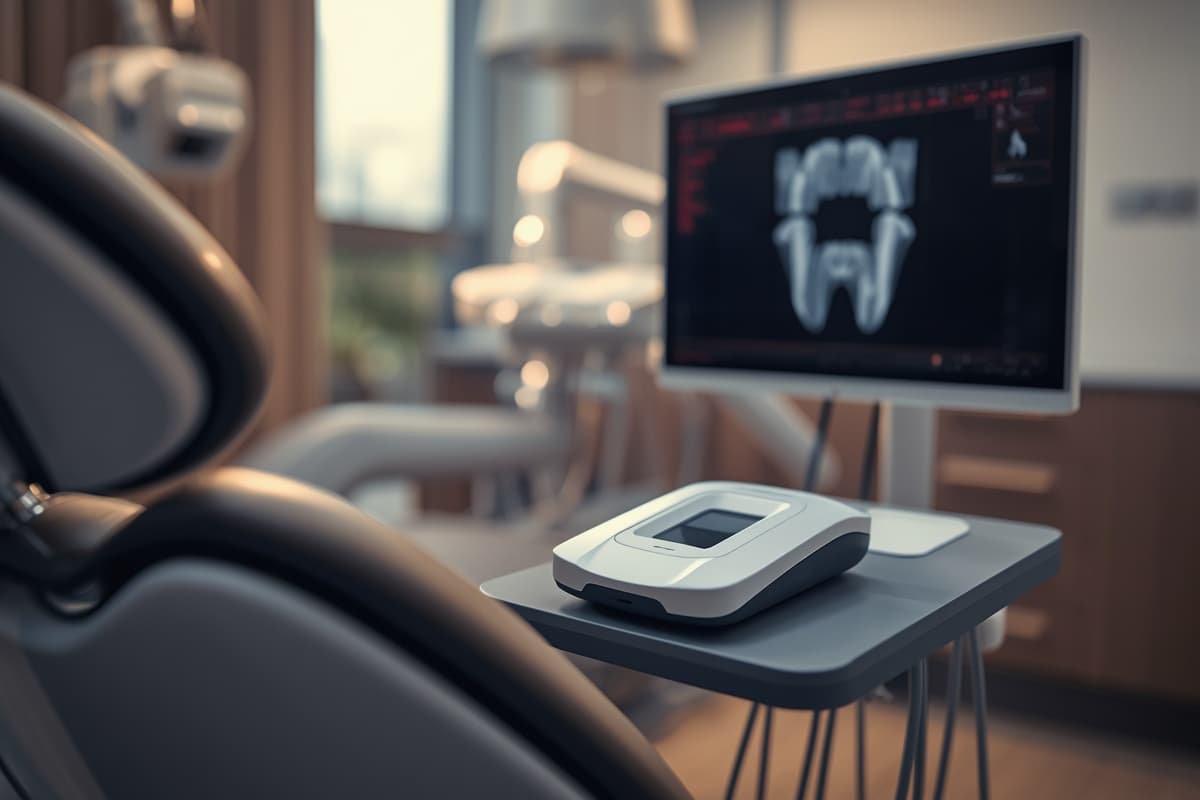
3Shape unveiled TRIOS 6, TRIOS Dx Plus software, and a companion patient app called DentalHealth on March 25, 2025. The hardware is essentially the TRIOS 5 platform with refinements — a redesigned remote button, an Arctic Sapphire finish, and up to 110% higher scan resolution. The real story is what ships with it.
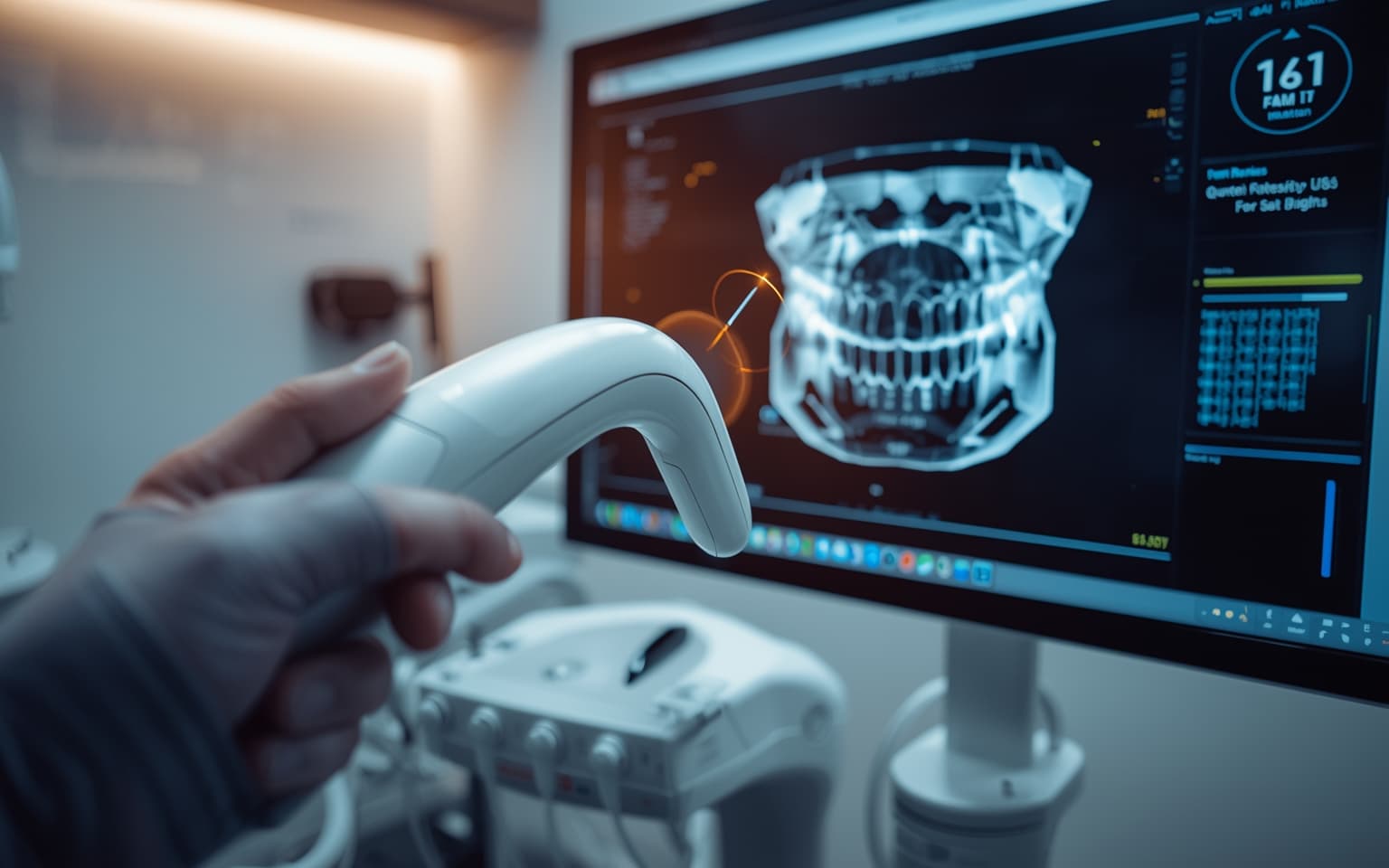
TRIOS 6 introduces hyperspectral imaging that captures white light, fluorescence, and near-infrared data in a single scan. Dx Plus then runs AI analysis on that multi-modal data automatically, producing five diagnostic views from one capture:
- Occlusal caries detection with severity classification and confidence ratings
- Tooth wear analysis that quantifies structure loss in millimeters and tracks changes over time
- Gingival recession mapping that auto-detects the CEJ and gingival margin and measures depth
- Plaque visualization without disclosing solutions
- Proximal caries visualization via near-infrared (visualization, not automated AI detection at launch)
Findings appear in a new Dx Plus tab seconds after the scan finishes. Clinicians can accept, modify, or override every AI finding — the software is assistive, not autonomous. Results can be pushed directly to the DentalHealth app so patients see the same color-coded 3D visualization on their phones at home.
Two important caveats, straight from 3Shape: TRIOS Dx is not FDA-cleared for clinical use in the USA at launch, and proximal caries detection is visualization-based rather than AI-detected. Dx Plus is sold as an add-on subscription on top of the scanner. Early independent reviews — from the Institute of Digital Dentistry and clinicians like Dr. Michael Scherer — have been broadly positive on tooth wear and recession tracking, more cautious on plaque visualization, and uniformly impressed by the patient communication workflow.
Why It Matters for Your Practice
For years, the intraoral scan was a means to an end: capture the arch, send the STL, move on. TRIOS Dx Plus reframes that capture as clinical data you can reuse across hygiene, restorative, perio, and case presentation.
IOS scans just became a diagnostic surface. Bitewings and PAs still drive interproximal and periapical diagnosis. But surface caries, wear, and recession — conditions radiographs either miss or poorly communicate — now have an objective, measurable data layer. For practices investing in AI-powered diagnostics, the question is no longer just "which X-ray AI do I pick?" It is "where in the workflow does AI belong?"
Case acceptance math changes again. Platforms that pair diagnostic detection with color-coded visuals consistently report meaningful lifts in treatment acceptance. The DentalHealth app extends that visualization home with the patient — where most "let me think about it" conversations actually happen.
Monitoring becomes a product. Quantitative tooth wear in millimeters and recession depth tracked scan-over-scan is longitudinal data that has been hard to produce consistently. For bruxism cases, erosion workups, and perio maintenance, objective documentation changes both the clinical conversation and the insurance conversation.
The competitive map is widening. Pearl, Overjet, and VideaHealth built strong franchises on radiograph AI. 3Shape is coming at diagnostics from the scanner side, and iTero and Medit are moving in similar directions. Expect the intraoral scanner category to look less like "digital impressions" and more like "chairside diagnostic platforms" over the next 24 months.
TMR Take: This is a meaningful launch, not a marketing one. Tooth wear and recession features are the real clinical value — they turn subjective observations into measurable data patients can see. Plaque and proximal caries features are earlier-stage and should be treated as patient communication tools for now, not replacements for disclosing solution or bitewings. US practices need to read the FDA caveat carefully: Dx Plus is not cleared for clinical use in the USA, so diagnostic features are positioned as patient education and monitoring rather than primary diagnosis. Even so, this is the most ambitious rethink of what a scanner is for since wireless landed in 2017.
What to Do Now
-
Map your IOS strategy to diagnostics, not just impressions. If you are evaluating scanners in the next 12 months, add AI-assistive diagnostics to your requirements list alongside accuracy, speed, and open file formats.
-
If you already run a TRIOS 5, do the math carefully. Dx Plus is a subscription on top of a scanner. The ROI lives in tooth wear, perio monitoring, and case acceptance — not in replacing your radiograph AI stack.
-
Decide where AI belongs in each workflow. Bitewings AI for interproximal caries and bone loss. Scanner AI for wear, recession, and patient communication. Complementary, not substitutes.
-
Watch FDA clearance status. US practices should confirm current regulatory status with their 3Shape rep before building workflows that depend on AI-driven diagnosis.
The Bottom Line
3Shape just made the intraoral scan do more than record geometry. TRIOS Dx Plus is an early — but credible — move toward scanners as chairside diagnostic platforms, with the strongest clinical value today in wear and recession monitoring and the strongest commercial value in patient communication. Practices that thought about their scanner purely as an impression tool should start thinking about it as a data platform that happens to also make great crowns.
We track every major shift in dental AI and imaging as it happens. Take our free software match quiz to find the right tools, or subscribe to The Molar Report for ongoing intelligence.