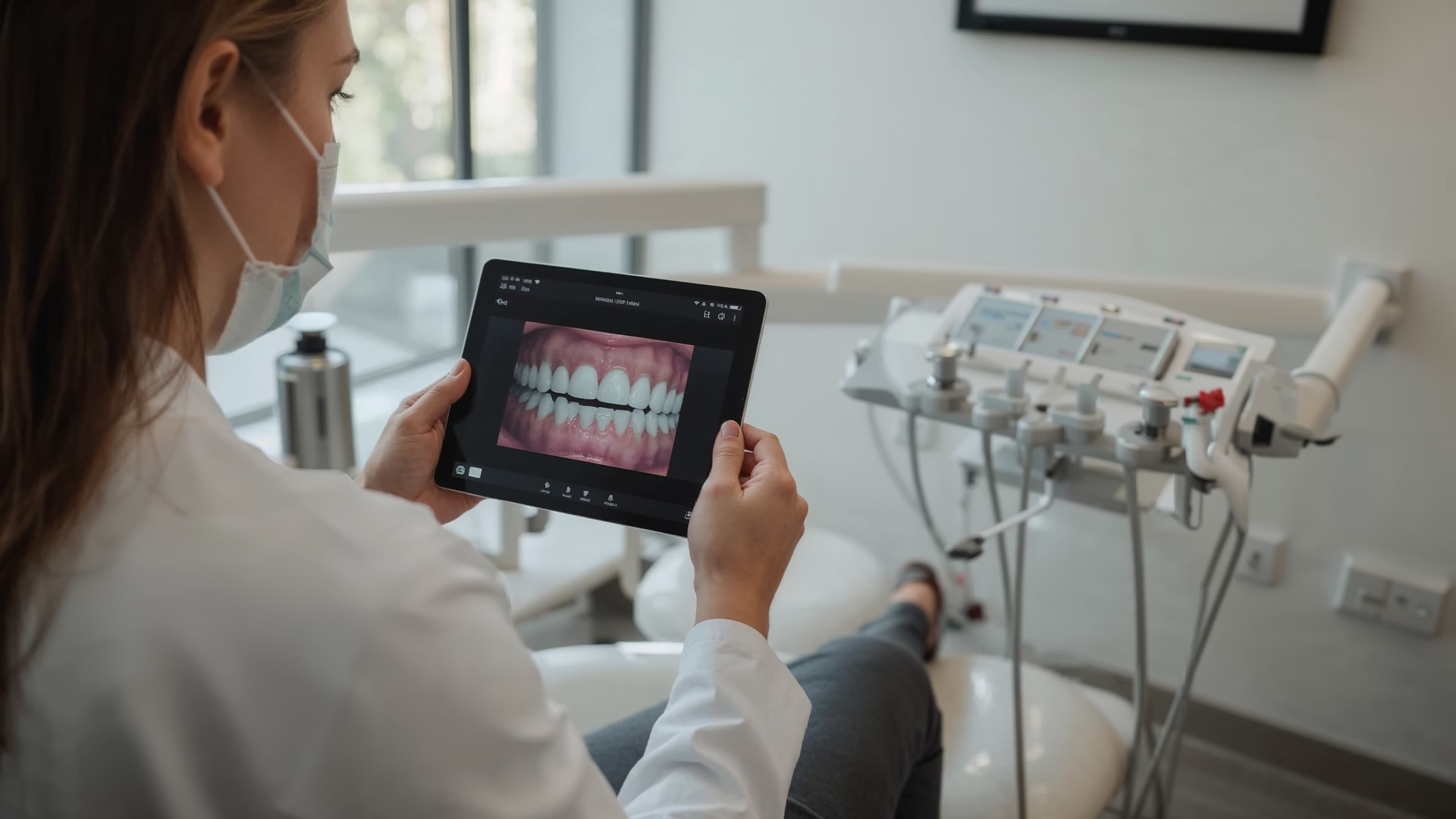
30% of US dentists now offer teledentistry in some form, and at federally qualified health centers, virtual dental visits jumped 55-fold during the pandemic and never came back down. The category is no longer a COVID workaround — it has become a real channel for emergency triage, ortho monitoring, hygiene pre-screening, and reaching patients who would otherwise no-show or land in an emergency room.
The challenge for most practices is not whether to offer virtual care, but which platform actually fits the workflow. We evaluated a leading teledentistry tools used by US dental practices, weighing HIPAA posture, intraoral camera integration, ortho-specific features, store-and-forward vs synchronous capabilities, and what dentists report from real deployments. Below are the six that earned a spot — plus a quick framework for evaluating dental software before you sign anything.
What to Look For in a Teledentistry Platform
Before comparing vendors, focus on five criteria that separate genuinely useful platforms from glorified video chat:
1. HIPAA-compliant infrastructure with a BAA. Zoom and FaceTime are not teledentistry tools. Any platform you adopt needs end-to-end encryption, audit logs, a signed Business Associate Agreement, and a workflow that keeps protected health information out of consumer messaging apps. If you are not sure where your practice stands today, our HIPAA compliance checklist for dental software is the right place to start.
2. Synchronous and store-and-forward in one place. Live video consults solve emergencies and triage. Store-and-forward — patients submitting photos, X-rays, or intraoral camera images for asynchronous review — is what actually scales. The strongest platforms support both modes from one record so the clinical history stays unified.
3. Intraoral camera and imaging integration. Teledentistry without good images is just a phone call. Platforms that pair with intraoral cameras (or include their own hardware) let hygienists and assistants capture diagnostic-quality photos that the dentist can review later or co-pilot in real time. Image quality is the single most-cited factor in practitioner reviews of these tools.
4. State licensure and reimbursement awareness. Since the May 2023 end of the public health emergency, only 14 state Medicaid programs continue to reimburse teledentistry, and most states still require the provider to hold a license in the patient's state. Pick a platform whose team understands these rules and helps you stay inside them — not one that hand-waves the regulatory layer.
5. PMS and workflow integration. A teledentistry platform that lives outside your practice management system creates double-entry and lost notes. Look for tools that push consults, images, and documentation back into the patient chart in Dentrix, Eaglesoft, Open Dental, Curve, or whatever you run today.
1. DentalMonitoring — Best for Orthodontic Remote Monitoring
TMR Rating: 9.0/10 | Read full review
DentalMonitoring is the category leader for AI-powered remote orthodontic monitoring. Patients scan their own mouths with a smartphone and a small ScanBox attachment, the platform's AI tracks 130+ oral observations across aligner and braces treatments, and the doctor only intervenes when something needs attention. Practices using it report cutting in-office visits by roughly 45% without losing clinical control.
Best for: Orthodontic practices and DSOs that want to reduce chair time per case while maintaining tight oversight of every active treatment.
Key strength: AI-driven scan analysis that flags clinical events automatically, so doctors review exceptions instead of routine check-ins.
What stands out: DentalMonitoring is bundled into the workflow rather than bolted on. It works across Invisalign, Spark, in-house aligners, and traditional braces, and the dashboard is built around exception-based monitoring — you see the patients who need you, not the ones who do not. For orthodontists evaluating their broader toolkit, our orthodontic software guide puts this in context with the rest of the ortho stack.
Worth knowing: DentalMonitoring is purpose-built for orthodontics — general dentists doing occasional virtual consults will find it more than they need. The investment makes sense once you have a meaningful aligner or braces caseload, and the team will scope deployments to fit practice size.
2. Teledentix (MouthWatch) — Best for Practice-Integrated Virtual Care
TMR Rating: 7.0/10 | Read full review
Teledentix is the cloud teledentistry platform built by MouthWatch, the company most US dental offices already know from their intraoral cameras. The pairing matters: hygienists can capture diagnostic-grade images chairside and route them into a virtual consult, store-and-forward case, or specialist referral without leaving the workflow. Capterra reviewers consistently call out the image quality and the support team.
Best for: Practices that want a dedicated, HIPAA-compliant teledentistry platform with intraoral camera integration — particularly offices doing 15+ virtual consultations a month or multi-location groups connecting patients with remote specialists.
Key strength: Tight integration with MouthWatch intraoral cameras, plus live video, store-and-forward, and referral management in one platform.
What stands out: Teledentix supports the full range of teledentistry workflows — synchronous video consults, asynchronous photo reviews, second opinions, secure messaging, and treatment planning — and pulls them together with EHR integration and analytics. Practitioners on Capterra describe the setup as logical, the photos as crisp, and the support staff as genuinely helpful, with training videos that get teams comfortable quickly.
Worth knowing: Teledentix is a focused teledentistry product, not an all-in-one practice platform. Practices that already run a strong patient communication tool will get the most value; if you are also rebuilding patient messaging, our best dental patient communication software guide is a useful companion read.
3. SmileSnap — Best for Virtual Consultation Lead Generation
TMR Rating: 7.0/10 | Read full review
SmileSnap takes a different angle on virtual care: it lives on your website as a smile-assessment widget that turns curious visitors into pre-screened consultation leads. Patients submit a few photos and a short questionnaire, your team responds with a personalized treatment idea, and the qualified prospects walk in already warmed up. The platform is used in 1,200+ dental offices, mostly orthodontic and cosmetic.
Best for: Orthodontic and cosmetic practices that want to convert website visitors into qualified consultation leads through photo submissions and virtual triage before chair time.
Key strength: Front-of-funnel virtual consult workflow that captures, qualifies, and routes new-patient leads from your existing website.
What stands out: SmileSnap is purpose-built for the top of the patient acquisition funnel rather than ongoing care. Embedded directly on the practice website, it lets prospective patients self-screen for clear aligners, veneers, or comprehensive ortho — and gives the practice's coordinator everything they need to book a high-intent consult. For cosmetic and ortho practices that already invest in marketing, it closes the gap between traffic and chair.
Worth knowing: SmileSnap is a lead-conversion and triage tool, not a full virtual care platform — practices that need synchronous video visits or ortho remote monitoring will want to pair it with another tool. It is also strongest for elective and cosmetic case types where patients are willing to share photos as part of the consult.
4. Denteractive — Best for Adding Teledentistry Without a Heavy Lift
TMR Rating: Under Review | Read full review
Denteractive is a HIPAA-compliant teledentistry platform built by dentists, with live video, secure messaging, file sharing, ePrescribing, and a teledentistry portal widget that drops onto a practice website. It also runs a built-in patient marketplace that connects offices with patients searching for virtual care — a useful add for practices looking to fill schedule gaps.
Best for: Practices that want to add teledentistry without a large upfront investment, with the option to tap into a built-in patient marketplace for new-patient flow.
Key strength: End-to-end HIPAA-compliant video and messaging plus a patient acquisition channel layered into the same platform.
What stands out: Denteractive bundles the things a practice actually needs to launch virtual care — secure video, document sharing, X-ray review, and ePrescriptions — with a website widget that lets existing patients self-schedule virtual visits. The marketplace component is what differentiates it from pure software plays: practices can opt in to receive consults from patients in their area who are looking for online dental care, including emergency triage and second opinions.
Worth knowing: Pricing requires a sales conversation, and the depth of marketplace demand varies by region. Practices that want to evaluate it should treat the marketplace as upside rather than a guaranteed channel.
5. Dentulu — Best for Mobile and AI-Assisted Virtual Dentistry
TMR Rating: Under Review | Read full review
Dentulu is a mobile dentistry and teledentistry ecosystem connecting patients with a network of 350+ dentists across the US. The platform combines virtual consults, in-home and on-site mobile visits, AI-powered image analysis (including second-opinion X-ray review and early cavity and gum disease detection), and at-home diagnostics like salivary testing and sleep apnea screening. Cellerant named it a "Best of Class" teledentistry platform.
Best for: Practices offering on-demand virtual consultations and concierge or mobile services, and consumers seeking affordable second opinions.
Key strength: AI-assisted virtual care plus a mobile-dentistry network that extends services beyond the four walls of the practice.
What stands out: Dentulu is the most ambitious platform in this list — virtual consults, mobile visits, AI imaging, and at-home diagnostics in one app. For practices that want to experiment with concierge care, hospital and long-term care visits, or AI-assisted second opinions, it is one of the only end-to-end options on the market. Founded in 2017, it has expanded from California to nationwide coverage and operates within ADA protocols.
Worth knowing: Dentulu's breadth means individual practices typically use a subset of the platform rather than everything at once. Pricing is flexible (subscription or pay-as-you-go), and the right starting point is usually a single use case — virtual second opinions or mobile visits — before expanding.
6. Live Dentist — Best for After-Hours Patient-Facing Triage
TMR Rating: 4.0/10 | Read full review
Live Dentist is a 24/7 on-demand consultation service that connects consumers with board-certified dentists by video. It is included here because dentists frequently ask about it — but it is worth being clear about the use case. Live Dentist is built for patients, not for practice integration. It is most useful as a patient-facing referral resource for after-hours emergencies when your office is closed, not as the platform you adopt for in-practice virtual care.
Best for: Patients needing after-hours dental guidance. Practices looking for a clinical workflow tool should start with DentalMonitoring, Teledentix, or Denteractive instead.
Key strength: 24/7 access to licensed dentists with no insurance or account requirements for patients.
What stands out: For practices in markets with limited after-hours coverage, Live Dentist can be a useful resource to mention to patients who call after the office closes — it can help triage real emergencies away from the ER and toward in-office follow-up the next day.
Worth knowing: Live Dentist is a consumer service rather than a practice platform. If you are evaluating tools to embed in your own workflow, the other five platforms in this list are the right starting point.
Quick Comparison
| Platform | Best For | Synchronous | Store-and-Forward | Intraoral Camera | Relative Pricing |
|---|---|---|---|---|---|
| DentalMonitoring | Ortho remote monitoring | Yes | Yes (AI scans) | Smartphone + ScanBox | Premium |
| Teledentix | Practice-integrated virtual care | Yes | Yes | MouthWatch native | Mid-range |
| SmileSnap | Virtual consult lead gen | No | Yes (photos) | Patient photos | Value to Mid-range |
| Denteractive | Low-lift teledentistry + marketplace | Yes | Yes | Bring your own | Value to Mid-range |
| Dentulu | Mobile + AI-assisted virtual care | Yes | Yes | MouthCAM + AI | Flexible |
| Live Dentist | After-hours patient triage | Yes | No | N/A | Consumer service |
How We Evaluated
Every platform on this list has a dedicated TMR review based on publicly available vendor documentation, third-party review analysis (G2, Capterra, Software Suggest), and practitioner sentiment from dental community discussion from public review sources. We weighted five dimensions: HIPAA posture and BAA availability, synchronous and store-and-forward depth, intraoral camera and imaging integration, fit with real practice workflows (ortho, GP, DSO, mobile), and value relative to use case.
We included both dental-specific virtual care platforms and adjacent tools (lead-gen widgets, mobile dentistry networks) that solve overlapping problems. Platforms were excluded if they lacked a published TMR review or if they targeted only consumers with no clinical workflow component. Pricing uses relative language because nearly every vendor in the category requires a sales conversation for an exact quote.
The Bottom Line
Teledentistry has matured from a pandemic patch into a real channel for ortho monitoring, emergency triage, lead generation, and after-hours coverage. The right platform depends entirely on the use case: DentalMonitoring for orthodontic remote monitoring, Teledentix for practice-integrated virtual care with strong imaging, SmileSnap for converting website traffic into pre-screened cosmetic and ortho consults, Denteractive for adding teledentistry without a heavy lift, Dentulu for mobile and AI-assisted virtual dentistry, and Live Dentist as a patient-facing after-hours resource.
Not sure which fits your practice? Take our software match quiz for a personalized recommendation based on your specialty, patient mix, and existing tech stack.