The ADA Just Simplified Oral Cancer Screening
With roughly 60,480 new oral and oropharyngeal cancer cases projected in the U.S. this year and a five-year survival rate that swings from 80% at Stage 1 to just 20% at Stage 4, early detection is not optional — it is the single biggest lever your practice has. The ADA agrees, and its latest guideline update makes the path forward clearer than ever.
On April 6, the American Dental Association published the second set of recommendations from its living guideline on early oral cancer detection. The message: prioritize what you already do well — the clinical exam — and skip the vital staining adjuncts.
What Happened
The new recommendations, published in the June 2026 issue of The Journal of the American Dental Association (JADA), build on the first set released in March that addressed cytology adjuncts. This second installment focuses specifically on vital staining — the use of dyes like toluidine blue to highlight potentially abnormal tissue.
The ADA now conditionally recommends against using vital staining adjuncts in two scenarios:
- To determine the need for biopsy or referral in adults with any mucosal abnormality in the oral cavity or on the lip.
- To screen asymptomatic adults with no clinically evident mucosal abnormalities.
The guideline reaffirms three good practice statements that have not changed:
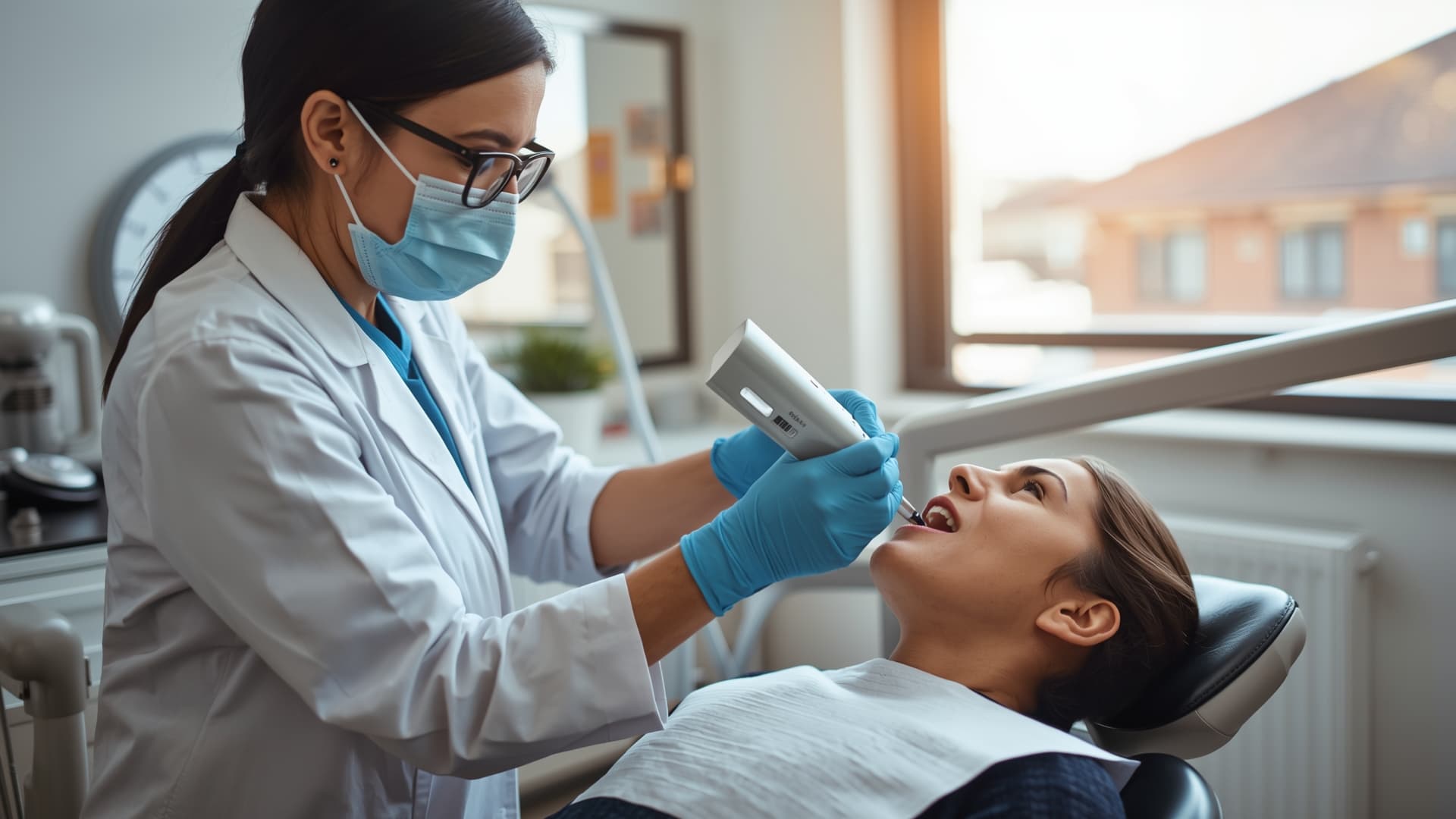
- Clinicians should obtain updated medical, social, and dental histories and perform a comprehensive extraoral and intraoral visual and tactile exam on every adult patient.
- Clinicians should communicate the exam's role in early detection of mucosal abnormalities.
- Punch or scalpel biopsy followed by histopathological assessment remains the reference standard for a definitive diagnosis of oral squamous cell carcinoma (OSCC) or oral potentially malignant disorders (OPMDs).
As Dr. Mark Lingen of the University of Chicago Medicine put it: "Based upon the currently available science, we do not recommend the use of vital staining as a screening adjunct to aid in the decision-making process of determining which patients require a biopsy."
Why It Matters for Your Practice
If your practice already relies on thorough visual and tactile exams rather than staining kits, this guideline validates your approach. If you have been using toluidine blue or similar products, here is what the evidence now says:
- False positives are a real concern. Vital staining can flag tissue that does not actually require biopsy, leading to unnecessary procedures and patient anxiety.
- False negatives are equally problematic. A clean stain result may create false confidence, potentially delaying biopsy of a lesion that warrants one.
- The clinical exam is already your strongest tool. Dental professionals are uniquely positioned to catch precancerous and cancerous lesions during routine visits — no add-on product required.
This also matters from a workflow and cost perspective. Practices that have been purchasing staining kits or adjunctive screening products can redirect those resources toward training, documentation systems, or patient education — areas with clearer returns.
TMR Take: This guideline is good news for general practices. It simplifies the screening workflow, removes pressure to invest in adjunctive products with limited evidence, and puts the focus back on clinical skill. The ADA is essentially saying: trust your training, do a thorough exam, and when something looks concerning, biopsy or refer — do not wait for a dye to confirm what your eyes and hands already told you.